|
Weekly Parashah |
|||||
| Torah: Deuteronomy 15:19–16:17 | Haftara: Habakkuk 2:20–3:19 | Brit Chadashah:
Acts 2:21–42 |
|||
Shavu’ot II (Second Day of Shavu'ot)
שָׁבוּעוֹת ב |
|||||
Scripture: |
Deuteronomy 15:19–16:17
|
Torah |
|||
|
|
19 “All the firstborn males that are born in your herd and your flock you are to consecrate to Adonai your God. You are to do no work with the firstborn of your herd or shear the firstborn of your flock. 20 You are to eat it before Adonai your God year after year in the place Adonai chooses—you and your household. 21 But if it has any blemish—if it is lame or blind or has any serious blemish—you are not to sacrifice it to Adonai your God. 22 You are to eat it within your gates, the unclean and the clean together, just as they eat the gazelle or deer. 23 Only its blood you are not to eat—you must pour it out on the ground like water. Three Harvest Festivals16 “Observe the month of Aviv and keep the Passover to Adonai your God, for in the month of Aviv[a] Adonai your God brought you out from Egypt by night. 2 You are to sacrifice the Passover offering to Adonai your God, from the flock and the herd, in the place Adonai chooses to make His Name dwell. 3 You are not to eat hametz with it. For seven days you are to eat matzot with it, the bread of affliction—for you came out from the land of Egypt in haste. Do this so that all the days of your life you will remember the day when you came out from the land of Egypt. 4 No hametz should be seen with you in all your territory for seven days, and none of the meat you sacrifice on the evening of the first day may be left overnight until the morning. 5 You may not sacrifice the Passover offering within any of your gates that Adonai your God is giving you. 6 Rather, at the place Adonai your God chooses to make His Name dwell, there you will sacrifice the Passover offering in the evening at sunset—the time of your coming out from Egypt. 7 You are to cook and eat it at the place Adonai your God chooses, then you will turn around in the morning and journey home. 8 For six days you are to eat matzot. On the seventh day there is to be a solemn gathering for Adonai your God—on it you are to do no work. 9 Seven weeks you are to count for yourself—from the time you begin to put the sickle to the standing grain you will begin to count seven weeks. 10 Then you will keep the Feast of Shavuot[b] to Adonai your God with a measure of a freewill offering from your hand, which you are to give according to how Adonai your God blesses you. 11 So you will rejoice before Adonai your God in the place Adonai your God chooses to make His Name dwell—you, your son and daughter, slave and maid, Levite and outsider, orphan and widow in your midst. 12 You will remember that you were a slave in Egypt, and you are to take care and do these statutes. https://www.biblegateway.com/passage/?search=Deuteronomy%2015%3A19%E2%80%9316%3A17&version=TLV |
||||
Scripture: |
Habakkuk 2:20–3:19
|
Haftarah |
|||
|
But Adonai is in His holy Temple. Habakkuk’s Confidence in Adonai3 A prayer of Habakkuk the prophet, as a passionate song. 3 God comes from Teman, 7 I saw tents of Cushan under calamity. https://www.biblegateway.com/passage/?search=Habakkuk%202%3A20%E2%80%933%3A19&version=TLV |
 |
||||
Scripture: |
Acts 2:21–42 |
Brit Chadashah |
|||
|
|
And it shall be that everyone who calls 22 “Men of Israel, hear these words! Yeshua ha-Natzrati—a Man authenticated to you by God with mighty deeds and wonders and signs God performed through Him in your midst, as you yourselves know— 23 this Yeshua, given over by God’s predetermined plan and foreknowledge, nailed to the cross by the hand of lawless men, you killed. 24 But God raised Him up, releasing Him from the pains of death, since it was impossible for Him to be held by it. 25 For David says about Him, ‘I saw Adonai always before me, 29 “Brothers, I can confidently tell you that the patriarch David died and was buried—his tomb is with us to this day. 30 So because he was a prophet and knew God had sworn with an oath to him to seat one of his descendants on his throne, [c] 31 David saw beforehand and spoke of Messiah’s resurrection—that He was not abandoned to Sheol, and His body did not see decay.[d] 32 “This Yeshua God raised up—we all are witnesses! 33 Therefore, being exalted to the right hand of God and receiving from the Father the promise of the Ruach ha-Kodesh, He poured out this—what you now see and hear. 34 For David did not ascend into the heavens; yet he himself says, ‘Adonai said to my Lord, 36 “Therefore let the whole house of Israel know for certain that God has made Him—this Yeshua whom you had crucified—both Lord and Messiah!” Teshuvah—Thousands Immersed37 Now when they heard this, they were cut to the heart and said to Peter and the rest of the emissaries, “Fellow brethren, what shall we do?” https://www.biblegateway.com/passage/?search=Acts%202%3A21%E2%80%9342&version=TLV |
||||
Parashah in 60 seconds |
|||||
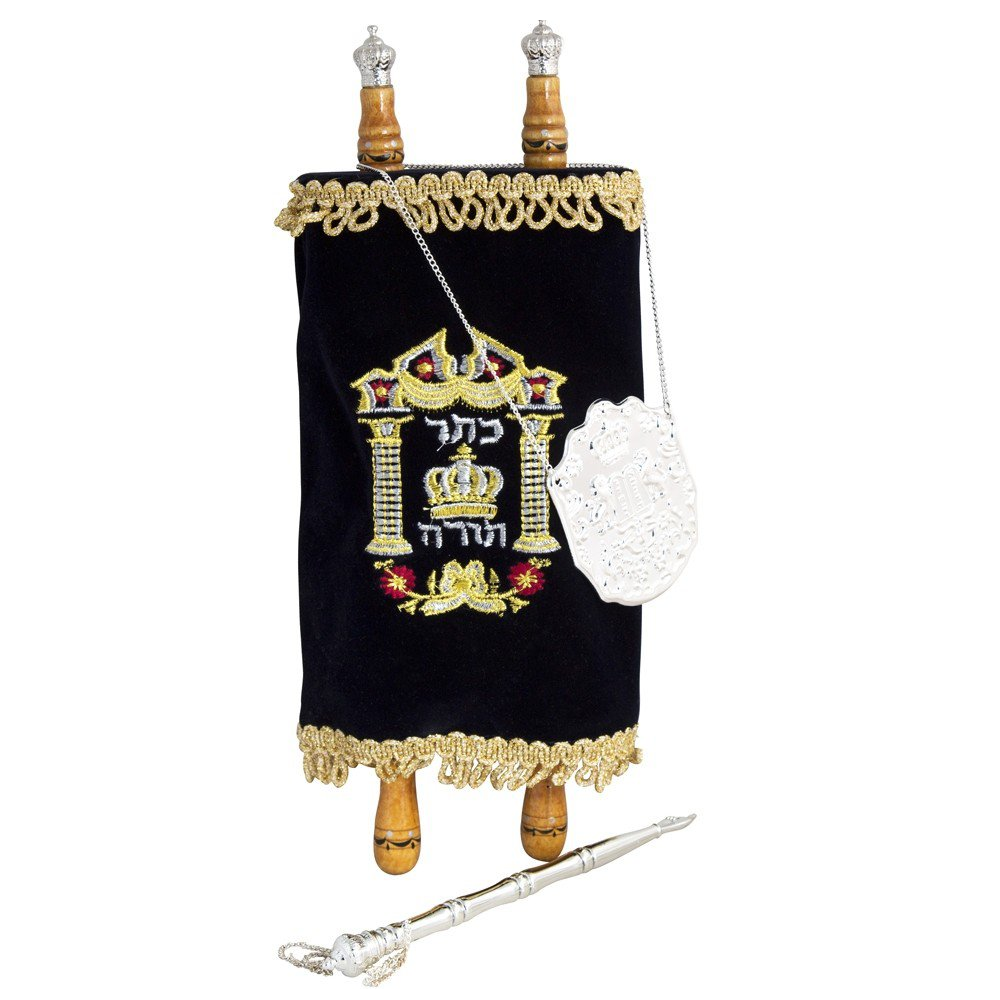

Blood on the Door
Blood on the Door
Blood on the Door is a profound exploration of the redemptive power of Yeshua (Jesus) and how His saving blood serves as the gateway to salvation. This enlightening book also delves into the symbolic significance of the Mezuzah, drawing parallels between God's Word and the covenantal blood on the doorpost of the Cross.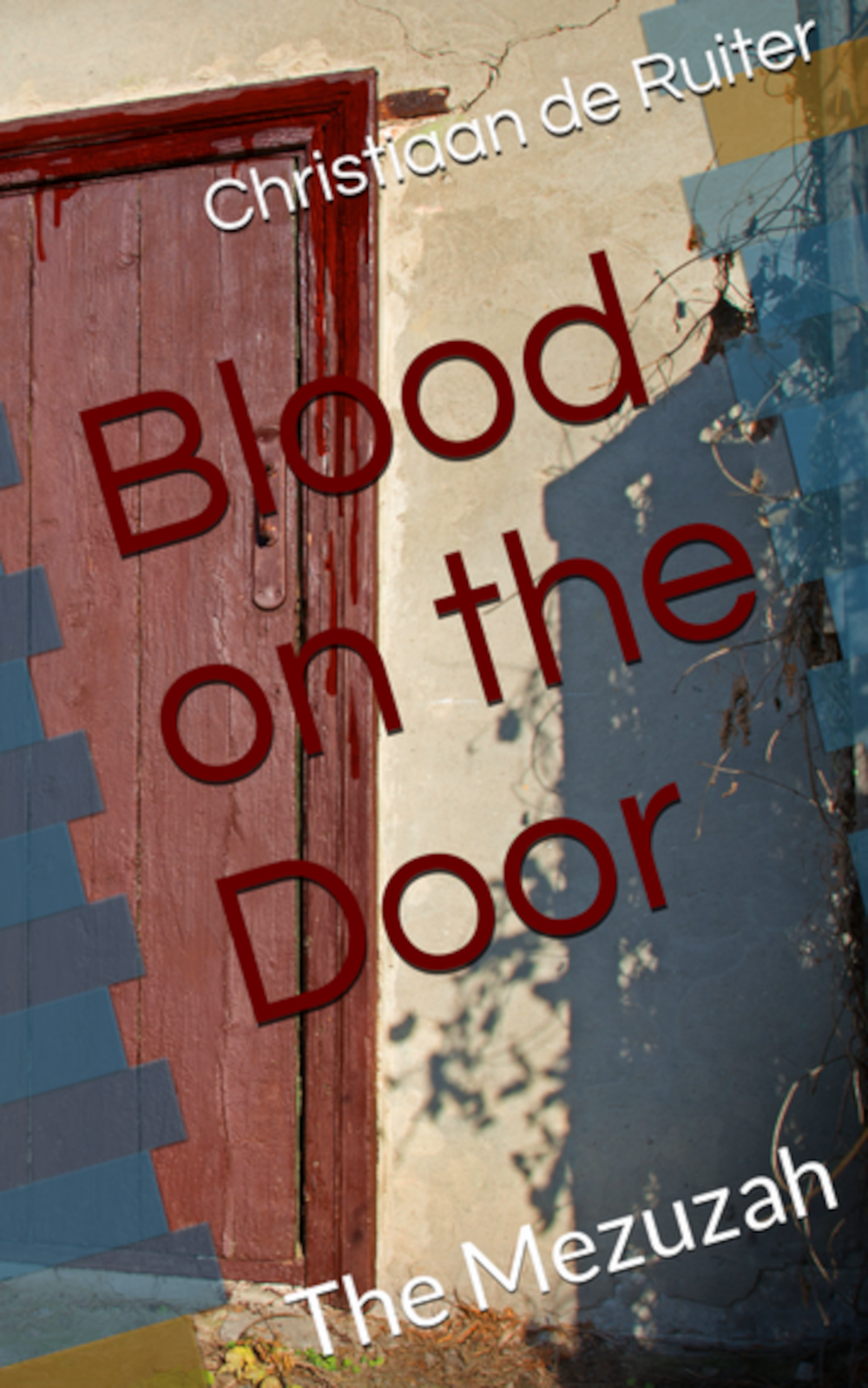
By examining the Mezuzah from both Jewish and Christian perspectives, Dr. de Ruiter's work highlights its role as a profound reminder of God's Word in our lives. In "Christians and the Mezuzah," readers from all backgrounds will gain a deeper understanding of the significance and relevance of this ancient practice. Dr. de Ruiter compellingly reveals that the biblical reminders found on doorposts and within the Mezuzah box are not solely for the Jewish community but are also integral to Christian faith.
Roots of our faith
As the Church increasingly recognizes the importance of understanding our Jewish roots, readers may find themselves captivated by the mysterious little box affixed to the doorposts of Jewish homes. Beginning with the first chapter, Dr. de Ruiter intrica tely explains the true nature and purpose of the Mezuzah. This thought-provoking book addresses questions such as: What exactly is a Mezuzah? Why should Christians pay attention to it? Is it merely a tradition, or does it hold deeper spiritual significance?
Unfortunately, in a world increasingly influenced by political correctness and its humanist underpinnings, expressing our faith becomes increasingly challenging. Symbols like the Mezuzah, which carry profound spiritual meaning, are not often embraced as politically correct expressions of faith. Nonetheless, this book fearlessly explores the importance of reclaiming and appreciating these sacred symbols in the face of cultural pressures.
Available from Amazon in Paperback, Hardback, and on the Kindle.