|
Weekly Parashah |
|||||
| Torah: Num. 4:21–7:89 | Haftara: Jdg. 13:2–25 | Brit Chadashah: Jn. 11:1–54 acts 21:17-26 |
|||
| Tzav (Command) נָשֹׂא |
|||||
Scripture: |
Numbers 4:21–7:89
|
Torah |
|||
|
|
21 Again Adonai spoke to Moses saying, 22 “Take a census also of the sons of Gershon, by their ancestral households and by their families. 23 Count all the males from 30 to 50 years of age, everyone coming to work in the service of the Tent of Meeting. 24 This is the task of the Gershonite families in working and carrying burdens. 25 They are to carry the curtains of the Tabernacle, the Tent of Meeting, its covering, the outer covering of porpoise hide, the curtains for the entrance for the Tent of Meeting, 26 the curtains surrounding the courtyard and the altar, the curtain for the entrance, the ropes and all the equipment used in its operations. They are to do all that needs to be done with these things. 27 The sons of the Gershonites are to do all their tasks, whether carrying or doing other work, according to the word of Aaron and his sons. You are to assign to them all that is their responsibility to carry. 28 This is the duty of the families of the sons of the Gershonites regarding the Tent of Meeting. Their duty will be under the direction of Ithamar son of Aaron the kohen. https://www.biblegateway.com/passage/?search=Num.+4%3A21%E2%80%937%3A89&version=TLV |
||||
Scripture: |
Judges 13:2–25
|
Haftarah |
|||
|
2 Now there was a certain man from Zorah, from a Danite clan, whose name was Manoah. His wife was barren and bore no children. 3 Then the angel of Adonaiappeared to the woman and said to her, “Behold now, you are barren and have not borne children, but you will conceive and bear a son. [a] 4 Now therefore be careful not to drink wine or strong drink, or eat any unclean thing. 5 For behold, you will conceive and bear a son. Let no razor come upon his head, for the boy will be a Nazirite to God from the womb.[b] He will begin to deliver Israel from the hand of the Philistines.” 6 Then the woman came and told her husband saying, “A man of God came to me and his appearance was like the appearance of the angel of God, very awesome! But I did not ask him where he was from, nor did he tell me his name. 7 He said to me, ‘Behold, you will conceive and bear a son. So, drink no wine or strong drink, and eat nothing unclean, for the child will be a Nazirite to God from the womb to the day of his death.” 8 Then Manoah entreated Adonai and said, “My Lord, please let the man of God whom You have sent come to us again and teach us what we will do for the boy to be born.” 9 God listened to the voice of Manoah, and the angel of God came again to the woman as she was sitting in the field, but her husband Manoah was not with her. 10 So the woman ran quickly and told her husband, and said to him, “Look, the man that came to me the other day has appeared to me!” 11 So Manoah got up and followed his wife. When he came to the man, he asked him, “Are you the one who spoke to the woman?” “I am,” he said. https://www.biblegateway.com/passage/?search=Jdg.+13%3A2%E2%80%9325&version=TLV |
![]() |
||||
Scripture: |
John 11:1–54
|
Brit Chadashah |
|||
|
|
Lazarus Is Dead11 Now a man named Lazarus was sick. He was from Bethany, the village of Miriam and her sister Martha. 2 This was the same Miriam who anointed the Master with perfume and wiped His feet with her hair. It was her brother Lazarus who was sick. 3 So the sisters sent a word to Yeshua, saying, “Master, the one you love is sick!” 4 When Yeshua heard this, He said, “This sickness will not end in death. It is for God’s glory, so that Ben-Elohim may be glorified through it.” 5 Now Yeshua loved Martha and her sister and Lazarus. 6 However, when He heard that Lazarus was sick, He stayed where He was for two more days. 7 Then after this, He said to His disciples, “Let’s go up to Judea again.” 8 “Rabbi,” the disciples say to Him, “just now the Judean leaders were trying to stone You! And You’re going back there again?” 9 Yeshua answered, “Aren’t there twelve hours in the day? If a man walks in the day, he doesn’t stumble, because he sees the light of the world. 10 But if a man should walk around at night, he stumbles, because the light is not in him.” https://www.biblegateway.com/passage/?search=Jn.+11%3A1%E2%80%9354&version=TLV Acts 21 : 17 - 26Advice from Jacob and the Elders17 When we arrived in Jerusalem, the brothers and sisters welcomed us gladly. 18 On the next day, Paul went in with us to Jacob; all the elders were present. 19 After greeting them, he reported to them in detail what God had done among the Gentiles through his service. 20 And when they heard, they began glorifying God. They said, “You see, brother, how many myriads there are among the Jewish people who have believed—and they are all zealous for the Torah. 21 They have been told about you—that you teach all the Jewish people among the Gentiles to forsake Moses, telling them not to circumcise their children or to walk according to the customs. 22 What’s to be done then? No doubt they will hear that you have come. 23 “So do what we tell you. We have four men who have a vow on themselves. [a]24 Take them, and purify yourself[b] along with them and pay their expenses, so that they may shave their heads. That way, all will realize there is nothing to the things they have been told about you, but that you yourself walk in an orderly manner, keeping the Torah. 25 “As for Gentiles who have believed, however, we have written by letter what we decided—for them to abstain from what is offered to idols, and from blood, and from what is strangled, and from immorality.” 26 The next day Paul took the men, purifying himself along with them. He went into the Temple, announcing when the days of purification would be completed and the sacrifice would be offered for each one of them. https://www.biblegateway.com/passage/?search=acts+21%3A17-26&version=TLV |
||||
Parashah in 60 seconds |
|||||
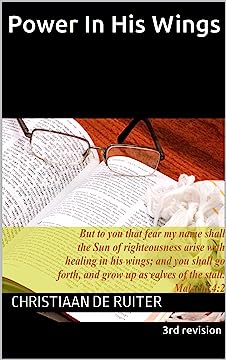
Power in His Wings 2023 Revision
Power in His Wings, the Tallit
In today's Christian landscape, there is a growing movement that seeks to rediscover the rich heritage of our faith by delving deep into its origins.
This powerful revival is placing a renewed emphasis on the profound truths found within the original languages of Hebrew and Greek. It is during this time of revival that long-standing barriers are being dismantled and damaging doctrines of replacement theology are being debunked.
One particular aspect that has been overlooked and even pushed aside within Christianity is the significance of the prayer shawl, also known as the tallit. Traditionally, the tallit has played an important role in Jewish worship, symbolizing the commandments of God and serving as a tangible reminder of His presence. However, throughout history, Christianity has gradually moved away from incorporating the prayer shawl into the lives of believers.
Instead, a new emphasis has been placed on the concept of the prayer closet, which is derived from Jesus' teachings on prayer in Matthew 6:6. The prayer closet represents a personal and intimate space where believers can seek God in solitude. While the prayer closet has its value and importance in fostering a deep connection with God, it should not overshadow or replace the significance of the prayer shawl, which was the original wording Jesus used.
One powerful example that highlights the importance of the prayer shawl can be found in the story of the woman with the issue of blood. In Mark 5:25-34, we read about her desperate act of faith as she reached out and touched the hem of Jesus' garment. Instantly, she was healed of her affliction. This miraculous encounter signifies the power and anointing that resides in the garment of Jesus, which includes the symbolism of the prayer shawl.
The revelation that emerges from this story is not only about the healing power of Jesus but also about the significance of our personal tabernacle. Just as the woman with the issue of blood found healing in touching the hem of Jesus' garment, we are invited to enter into a deeper understanding of our own personal tabernacle. It is within this sacred space that we can experience the presence and power of God in our lives.
Sadly, the emphasis on the prayer closet has overshadowed the understanding of our personal tabernacle. The prayer shawl serves as a powerful symbol of our connection with God and our identity as His chosen people. By embracing the significance of the prayer shawl, we reclaim the roots of our faith and reconnect with the rich Jewish customs and traditions that have been stripped away for too long.
It is time to challenge the false notion that Christianity has replaced the Jews as God's chosen people. As we delve deeper into the profound truths of God's Word, as Jesus Himself comprehended and taught it, we gain a more complete understanding of our faith. We recognize the importance of incorporating the prayer shawl, the prayer closet, and the revelation of our personal tabernacle into our spiritual journey.

In conclusion, Dr. Jeffery Davidson, in his endorsement of this book, acknowledges Dr. Christiaan de Ruiter's deep understanding of the knowledge of God and his maturing relationship with the Holy Spirit. The author's dedication to writing this book is an outward display of the miraculous in his life, and Dr. Davidson encourages readers to take this book seriously, as it holds the potential to be a transformative and blessing-filled resource. As we rediscover the profound truths of our faith, may we embrace the significance of the prayer shawl and the revelation of our personal tabernacle, leading us to a deeper connection with God and a more authentic expression of our Christian faith.
Read More in the New 2023 Revision of Power in His Wings.
Available from amazon in Paperback, Hardback, and on the Kindle.
Also in Dutch as Kracht in Zijn Vleugels.