|
Weekly Parashah |
|||||
| Torah: Lev. 12:1–13:59 | Haftara: 2 kings 4:42-5:19 | Brith Chadashah: John 6:8-13 Matt. 8:1-4 Luke 2:22-35 |
|||
| Tazria (She Conceives) תַזְרִיעַ |
|||||
Scripture: |
Lev. 12:1–13:59 |
Torah |
|||
|
|
Niddah Rest for New Mothers12 Then Adonai spoke to Moses saying: 2 “Speak to Bnei-Yisrael, instructing: If a woman conceives and bears a male child, then she will be unclean for seven days, as in the days of her niddah she will be unclean. 3 In the eighth day the flesh of his foreskin is to be circumcised. [a] 4 She must wait during the blood of purification for 33 days.[b] She is not to touch any holy thing, nor come into the Sanctuary, until the days of her purifying are completed. 5 But if she bears a female child, then she will be unclean for two weeks, as in her niddah, and she is to wait in the blood of purification for 66 days. 6 “When the days of her purification are completed for a son or for a daughter, she is to bring to the kohen, at the entrance of the Tent of Meeting, a year old lamb for a burnt offering and a young pigeon or a turtledove, for a sin offering. 7 He is to present it before Adonai and make atonement for her. Then she will be cleansed from the discharge of her blood. This is the Torah for her who gives birth, whether to a male or a female child. 8 If she cannot afford a lamb, then she is to bring two turtledoves or two young pigeons,[c] one for a burnt offering and the other for a sin offering. Then the kohen will make atonement for her, and she will be clean.”
|
||||
Scripture: |
2 Kings 4 : 42 – 5 : 19
|
Haftarah |
|||
|
42 Now a man came from Baal-shalishah, and brought the man of God bread of the firstfruits—20 loaves of barley bread and fresh ears of corn in his sack. Then he said, “Give them to the people that they may eat.” 43 But his attendant said, “What? Will I set this before a hundred men?” But he said, “Give them to the people that they may eat, for thus says Adonai, ‘They will eat and will have left over.’” 44 So he set it before them, and they ate and had some left over, according to the word of Adonai. 5 Now Naaman, commander of the army of the king of Aram, was a great man in his master’s sight and highly esteemed, because through him Adonai had given victory to Aram. Though the man was a mighty man of valor, he had tza’arat. 2 Aram had gone out in bands, and had taken captive a young girl from the land of Israel. So she served Naaman’s wife. 3 Then she said to her mistress, “If only my lord went before the prophet who is in Samaria! Then he would cure him of his tza’arat.” 4 So Naaman went in and told his master, saying, “Thus and thus spoke the girl who is from the land of Israel.” 5 The king of Aram said, “Go now, and I will send a letter to the king of Israel.” So he departed and took with him ten talents of silver, 6,000 pieces of gold, and ten changes of clothes. 6 He brought the letter to the king of Israel saying, “When this letter comes to you, behold, I have sent my servant Naaman to you, so you may cure him of his tza’arat.” 7 Now when the king of Israel read the letter, he ripped his clothes and said, “Am I God, to kill and to make alive, that this man is sending to me to cure a man of his tza’arat? But please consider, and see how he is seeking a pretext against me.”
|
 |
||||
Scripture: |
John 6:8-13 |
Brit Chadashah |
|||
|
|
John 6 : 8 – 138 One of His disciples, Andrew, Simon Peter’s brother, said to Him, 9 “There’s a boy here who has five barley loaves and two fish—but what’s that for so many?” 10 Yeshua said, “Make the people recline.” There was much grass in the area. So the men reclined, about five thousand in number. 11 Then Yeshua picked up the loaves. And having given thanks, He distributed bread to everyone who was reclining. He did the same with the fish, as much as they wanted. 12 When the people were full, Yeshua said to His disciples, “Gather up the leftovers, so nothing is wasted.” 13 So they gathered them and filled twelve baskets with broken pieces from the five barley loaves, which were left over by those who had finished eating. https://www.biblegateway.com/passage/?search=John+6%3A8-13&version=TLV
Matthew 8 : 1 – 4Healing Those who Trust8 When He came down from the mountain, large crowds followed Him. 2 And a man with tzara’at came to Him and bowed down before Him, saying, “Master, if You are willing, You can make me clean.” 3 Yeshua stretched out His hand and touched him, saying, “I am willing. Be cleansed.” Immediately his tzara’at was cleansed. 4 And Yeshua said to him, “See that you tell no one; but go show yourself to the kohen and offer the gift that Moses commanded, as a testimony to them.”[a] https://www.biblegateway.com/passage/?search=Matt.+8%3A1-4&version=TLV
Luke 2 : 22 – 3522 And when the days of their purification were fulfilled,[a] according to the Torah of Moses, they brought Him to Jerusalem to present to Adonai. 23 As it is written in the Torah of Adonai, “Every firstborn male that opens the womb shall be called holy to Adonai.” [b] 24 So they offered a sacrifice according to what was said in the Torah of Adonai: “a pair of turtle doves, or two young pigeons.”[c] 25 Now there was a man in Jerusalem whose name was Simeon, and this man was just and pious, waiting for the consolation of Israel.[d] The Ruach ha-Kodesh was on him. 26 And it had been revealed to him by the Ruach ha-Kodesh that he would not die before he had seen the Anointed One of Adonai. 27 So in the Ruach, Simeon came into the Temple; and when the parents brought the Child Yeshua to do for Him according to the custom of the Torah, 28 Simeon received Him into his arms and offered a bracha to God, saying, 29 “Now may You let Your servant go in peace, O Sovereign Master,[e] https://www.biblegateway.com/passage/?search=Luke+2%3A22-35&version=TLV |
||||
Parashah in 60 seconds |
|||||
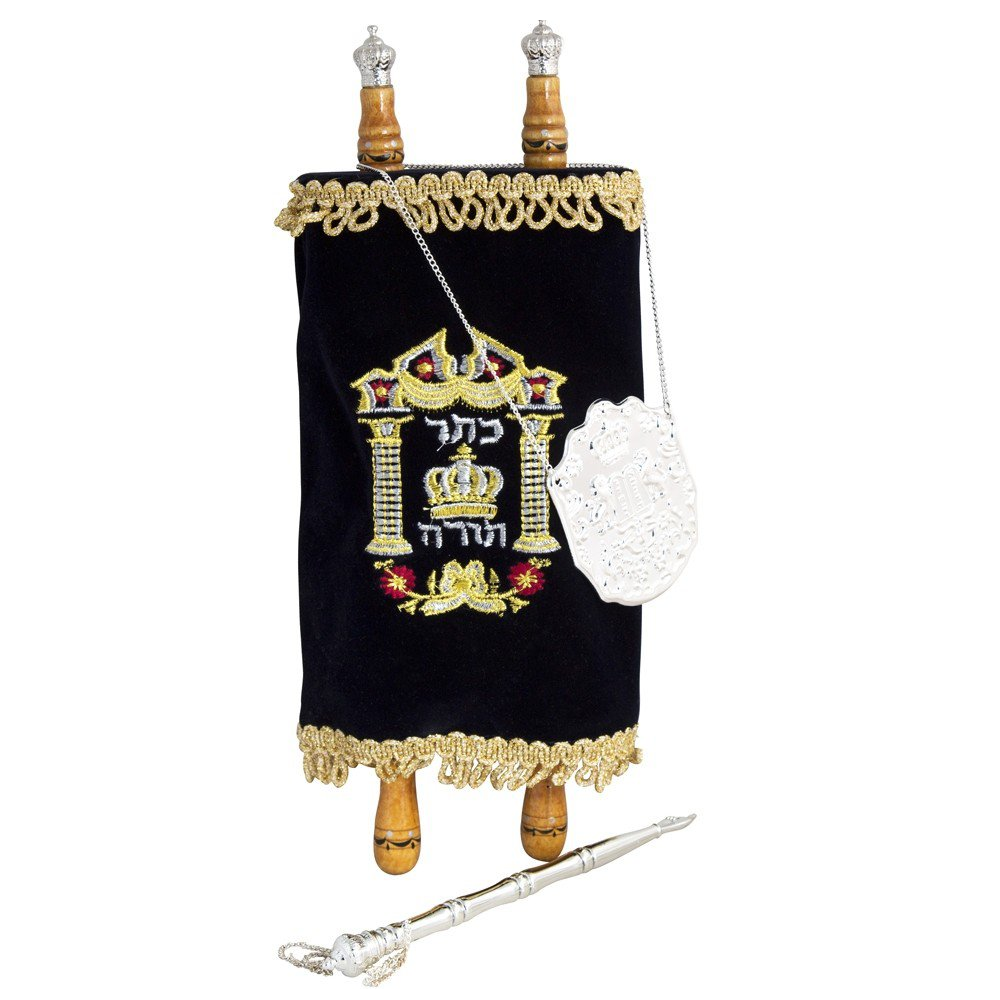

04 Supersessionism
Supersessionism, A Complex Theological Stance
Historical Background
Historically, Christianity has embraced the doctrine of supersessionism, often referred to as replacement theology.
This perspective implies or explicitly asserts that Christianity has replaced Judaism, effectively claiming that the Mosaic Covenant of the Hebrew Bible has been replaced by the New Covenant in Jesus Christ.
This New Covenant centers around salvation through God's grace, rather than strict obedience to the Torah.
A common thought to this belief is the idea that God's status of "chosen people" has transitioned from the Jewish community to the Christian Church.
Personal Reflections and Scriptural Insight
It is important to note that I DO NOT align with this belief. Even though Israel has rejected Jesus, it has not relinquished its status as God's chosen people. God, in His sovereign nature, does not waver or contradict Himself.
This conviction resonates with Jesus' statements as recorded in the Gospels and Paul's writings.
Matthew 5:17 (AMP) states:
"Do not think that I have come to do away with or undo the Law or the Prophets; I have come not to do away with or undo but to complete and fulfill them."
Additionally, Romans 11:29 (AMP) affirms:
"For God's gifts and His call are irrevocable. [He never withdraws them when once they are given, and He does not change His mind about those to whom He gives His grace or to whom He sends His call.]"
The Mosaic Covenant, Continuity and Transformation
The heart of supersessionism, wherein the Mosaic Covenant is purportedly annulled, finds varied agreement. Though adherence to God's Commandments may differ among believers, many of the laws of God are still observed, including observance of the Shabbat, some of the kashrut (dietary laws), and observance of other Holy days.
Jesus, The Fulfillment of the Law
Jesus Christ has inaugurated a way to approach God through grace, a path available to both Jew and Gentile. The Law, as referred to in traditional Judaism, does not offer a direct route to Heaven, especially considering the complexities and challenges of maintaining perfect obedience in our contemporary world. This leads to the profound words of Jesus, where He declared:
John 14:6 AMP
"Jesus said to him, I am the Way and the Truth and the Life; no one comes to the Father except by (through) Me."
Conclusion
Supersessionism, while historically influential within Christianity, is a complex and nuanced issue. Emphasizing a personal connection with the teachings of Jesus Christ, we can appreciate the ongoing significance of the Jewish tradition while recognizing that salvation is extended to all through Christ's grace.
This stance fosters a deeper understanding of the spiritual connection between Christianity and Judaism and a recognition of the timeless nature of God's promises and covenants.
It opens a dialogue between faith traditions and acknowledges the inherent value and continuity of God's revelation across time.